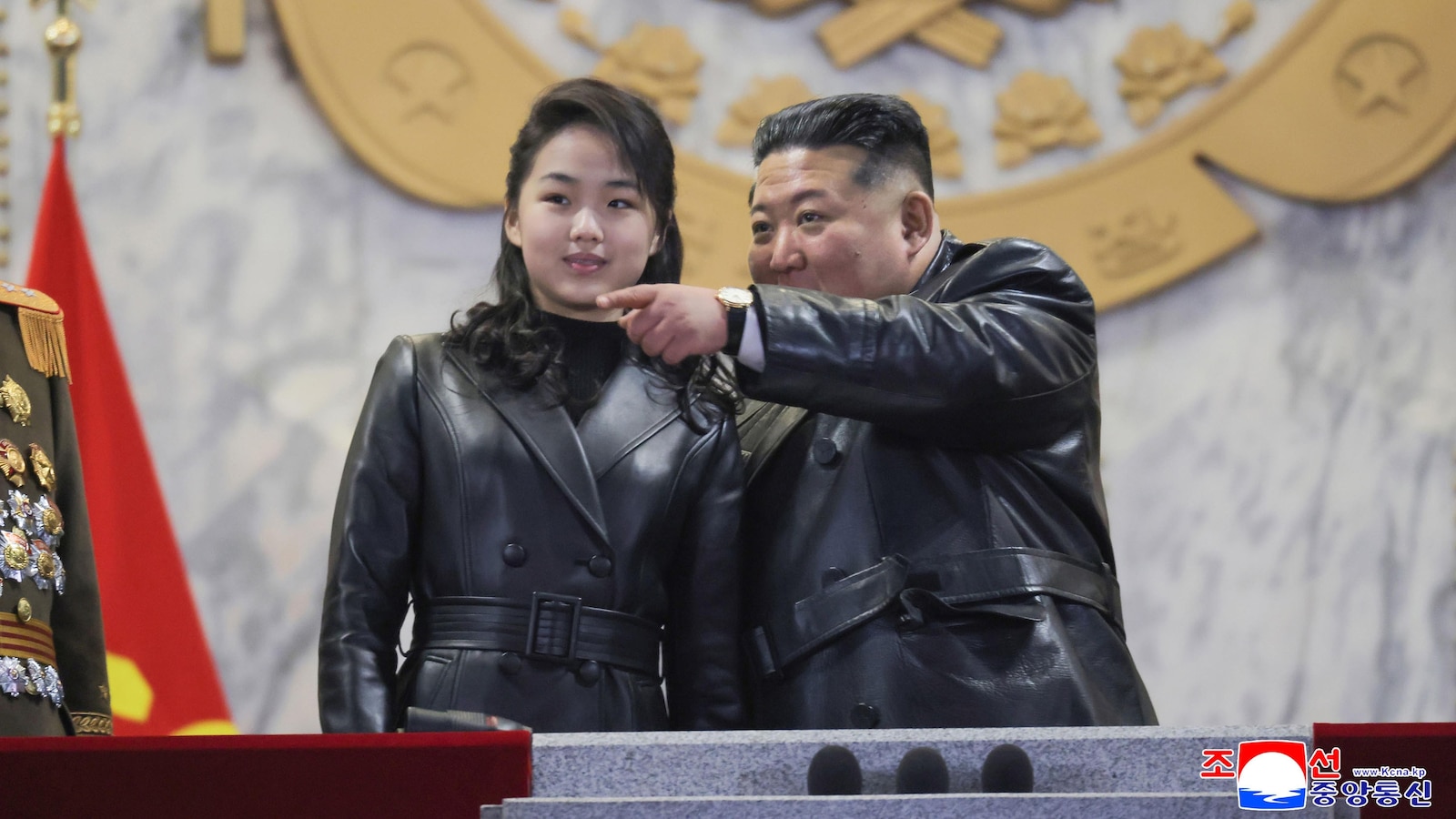
The Korean Peninsula remains one of the world's most enduring and volatile geopolitical flashpoints, largely due to the enigmatic and increasingly assertive actions of North Korea. At the heart of this tension lies the exceptionally complex relationship between Washington and Pyongyang. This dynamic, often characterized by periods of intense confrontation punctuated by fleeting moments of diplomatic engagement, profoundly shapes regional stability and global security. Recent pronouncements from North Korean leader Kim Jong Un underscore a hardened stance, not only regarding his nation's formidable nuclear ambitions but also dictating the terms for any future engagement with the United States and emphatically rejecting dialogue with South Korea.
Kim Jong Un's Bold Stance: Conditions for Engagement
In a significant address at the close of the Workers' Party congress, Kim Jong Un laid bare his conditions for improving US-North Korea relations, stating unequivocally that they hinge entirely on Washington's attitude. According to state news agency KCNA, Kim declared, "If the US withdraws its policy of confrontation with North Korea by respecting our country's current status... there is no reason why we cannot get along well." This statement is a powerful assertion of North Korea's demand for recognition as a legitimate nuclear state, a status the U.S. and its allies have consistently refused to grant. It places the onus squarely on the United States to make the first move, signaling that Pyongyang will not back down from its nuclear posture.
Despite previous high-profile summits with then-US President Donald Trump – a series of meetings that offered a glimpse of potential détente – Kim has since rejected overtures for a fourth encounter. This refusal highlights a deep-seated distrust and a strategic recalibration in Pyongyang, suggesting that past engagements did not yield the desired concessions or recognition. For the United States, navigating these demands means balancing pressure and diplomacy, constantly seeking a path that addresses proliferation concerns without legitimizing North Korea's nuclear status. This delicate dance defines the core challenge in contemporary Kim Jong Un's Ultimatum: What North Korea Wants From US Now.
The Alarming Expansion of North Korea's Nuclear Capabilities
Perhaps the most concerning aspect of Kim Jong Un's recent declarations is his explicit commitment to significantly bolster North Korea's nuclear forces. He outlined plans to "strengthen our national nuclear force" and "increase the number of nuclear weapons and expand nuclear operational means and space for use." This isn't mere rhetoric; it's a strategic roadmap for a more robust and versatile nuclear arsenal. The implications are profound:
- Increased Deterrence: A larger, more diverse arsenal enhances North Korea's perceived ability to deter attacks, potentially making pre-emptive strikes by adversaries riskier.
- First-Strike Capability Concerns: An expanded "operational means and space for use" could suggest a focus on developing capabilities for a first strike, or at least the perception of one, which would be highly destabilizing.
- Regional Arms Race: This expansion could compel neighboring countries, particularly South Korea and Japan, to reconsider their own defense postures, potentially leading to an arms race in the region.
- Proliferation Risks: More nuclear material and technology in North Korea could heighten concerns about leakage or transfer to other rogue states or non-state actors.
Further demonstrating this commitment, North Korea recently unveiled massive multiple rocket launchers capable of firing nuclear warheads. These new systems, coupled with ongoing ballistic missile tests, signal a technological leap in Pyongyang's ability to deliver nuclear payloads. For Washington, these developments complicate an already intractable challenge, demanding a continuous re-evaluation of defense strategies and diplomatic approaches. The primary goal remains denuclearization, yet North Korea's actions increasingly point towards entrenching its status as a nuclear power.
A Deep Dive into Washington-Pyongyang Relations: A History of Volatility
The relationship between Washington and Pyongyang is arguably the most volatile the United States maintains with any country, fundamentally shaped by a history of conflict and a persistent lack of formal diplomatic ties. Since the signing of the armistice that halted the Korean War in 1953, no peace treaty has ever been signed, leaving the two Koreas technically still at war, and the US a key player in this ongoing standoff.
The division of the Korean Peninsula following Japan's surrender in WWII set the stage for this enduring conflict. The US-backed South and Soviet-backed North formalized their separate states in 1948, leading to the devastating Korean War (1950-1953). This conflict, which saw direct involvement from the United States, the United Nations, China, and the Soviet Union, forged a deep-seated enmity and mistrust that continues to define US-North Korea relations. Over the decades, this relationship has been characterized by dramatic swings: from periods of dangerous escalation, marked by nuclear tests and missile launches, to tentative moments of reconciliation, often facilitated by multilateral talks or direct leader-level engagement. The pervasive tension impacts the entire region, with allies like South Korea and Japan living under the constant shadow of Pyongyang's provocations. Understanding this tumultuous history is crucial for anyone hoping to grasp the present dynamics of Washington's interactions with the isolated regime.
Pyongyang's Ostracization of South Korea: A Shifting Dynamic
Adding another layer of complexity to regional security, Kim Jong Un has unequivocally ruled out any discussions with South Korea, going so far as to describe Seoul as Pyongyang's "most hostile enemy." He dismissed recent signals of détente from the South as "deceptive" and asserted that North Korea had "absolutely no business" dealing with them. This hardened stance represents a significant ideological shift, as Kim declared the North no longer considers the South as "compatriots," having "permanently excluded" them from that category. This rejection of shared heritage marks a chilling escalation in inter-Korean relations.
Kim further threatened to "initiate arbitrary action" if Seoul were to engage in what he termed "obnoxious behavior," warning that "South Korea's complete collapse cannot be ruled out." This aggressive rhetoric not only shuts down immediate prospects for inter-Korean dialogue but also heightens the risk of miscalculation and localized conflict. For the United States, a key ally of South Korea, this presents an additional challenge. Washington must carefully balance its security commitments to Seoul with its broader efforts to manage North Korea's nuclear threat, all while navigating the implications of Pyongyang's increasingly isolationist and hostile posture towards its southern neighbor.
Navigating the Threat: Global Implications and Future Prospects
The escalating nuclear threat from North Korea, coupled with its unyielding stance on Washington and outright hostility towards Seoul, presents a formidable challenge to global peace and stability. The expansion of Pyongyang's nuclear arsenal is not merely a regional concern; it fundamentally undermines global non-proliferation efforts and risks inspiring other nations to pursue similar paths. For the international community, particularly the United States and its allies, navigating this threat requires a multi-pronged approach:
- Sustained Diplomacy, Realistic Expectations: While direct dialogue faces significant hurdles, maintaining channels of communication, even indirect ones, is vital to prevent miscalculation. However, expectations for rapid denuclearization must be tempered by North Korea's stated commitment to its nuclear program.
- Robust Deterrence: The US and its allies, particularly South Korea and Japan, must maintain a strong military deterrent to dissuade any aggressive actions from Pyongyang. This includes advanced missile defense systems and joint military exercises.
- Sanctions Enforcement: International sanctions remain a key tool to pressure North Korea economically. Strict enforcement is crucial to limit the regime's resources for its weapons programs.
- Regional Cooperation: Fostering strong cooperation among regional powers – the US, South Korea, Japan, and even cautiously engaging China – is essential to present a united front and coordinate responses.
The trajectory of Kim Jong Un's Ultimatum: What North Korea Wants From US Now suggests a long and arduous road ahead. There are no easy answers, and the stakes could not be higher. The balance between containing North Korea's nuclear ambitions and avoiding outright conflict will continue to be a defining test for international diplomacy.
In conclusion, North Korea's expanding nuclear arsenal and its leader's uncompromising rhetoric mark a concerning shift in an already perilous geopolitical landscape. The complex and often antagonistic US-North Korea relations are at a critical juncture, where Washington's approach to Pyongyang's demands for respect and recognition will significantly influence the future stability of the Korean Peninsula and global security. As North Korea pushes the boundaries of its military capabilities and isolates itself further, the international community faces the daunting task of finding a path to peace that addresses both proliferation concerns and the underlying tensions that fuel Pyongyang's ambitions.